Skip navigation

Mobile/Handheld
Tuesday, July 08, 2008

Penn State Horse Newsletter
Archive of Articles

Ann Swinker, Editor
aswinker@psu.edu

http://www.das.psu.edu/user/equine/newsletter/archive/index.cfm
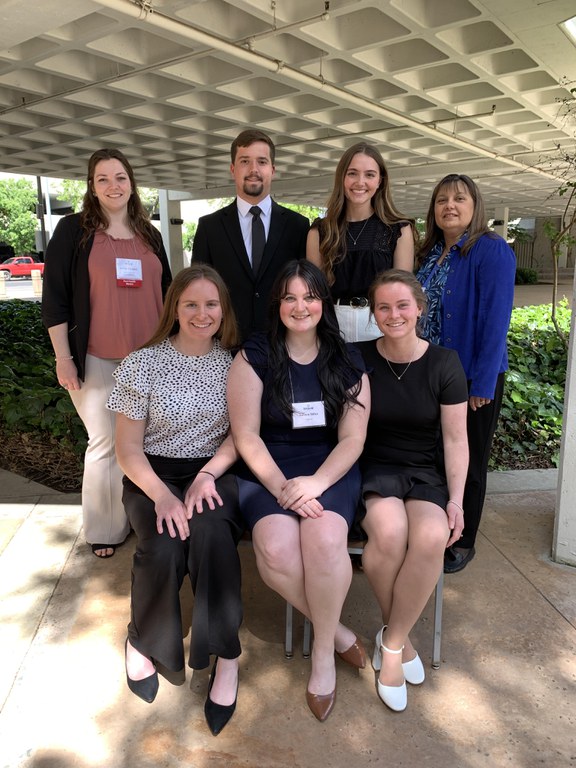
CHAPS Members Attend National Convention
This article is available from: http://www.das.psu.edu/das/news/chaps-members-attend-national-convention.
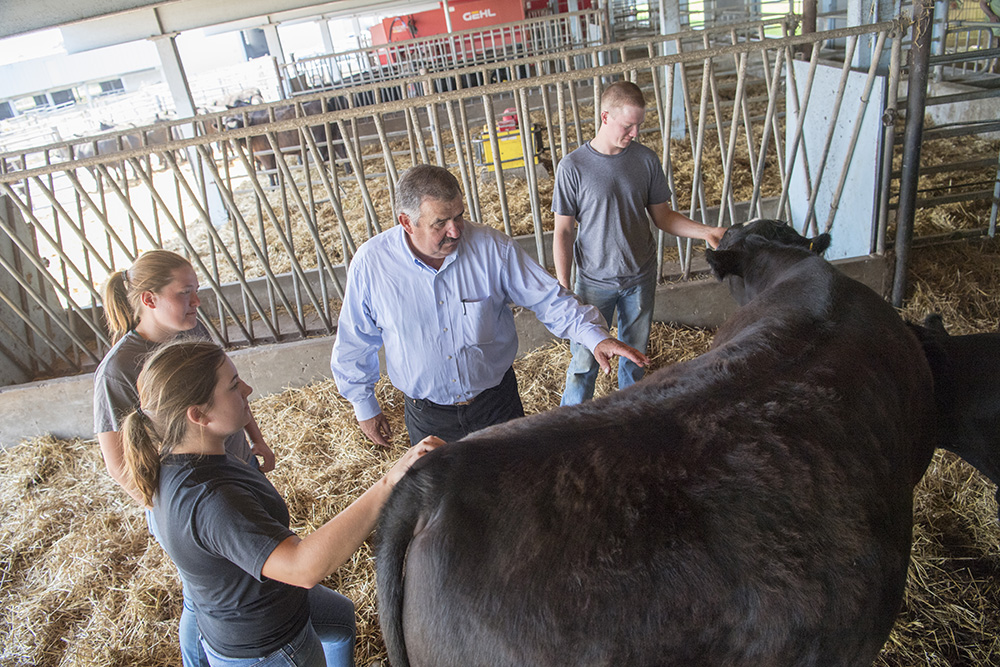
Penn State's Myers Trains Wild Mustang
This article is available from: http://www.das.psu.edu/das/news/penn-states-myers-trains-wild-mustang.
Staniar Joins Penn State Equine Faculty
Staniar brings a strong background and wide experience in the Thoroughbred industry, and will provide leadership in both research and undergraduate programs.
( Full article at http://www.das.psu.edu/user/equine/fullStory.cfm?newsID=1035 )
Youth Recognized for Achievements in PA 4-H Horsemanships Skills Program
Pennsylvania youth were honored for their mastery of Level 3 or 4 horsemanship and handling skills at the State 4-H Horse Show.
( Full article at http://www.das.psu.edu/user/equine/fullStory.cfm?newsID=1064 )
This article is available from: http://www.das.psu.edu/das/news/youth-recognized-for-achievements-in-pennsylvania.
McAllister Receives 4-H Horse Program Outstanding Service Award
Dr. E. Scott McAllister, VMD, was recognized for his service to the equine industry and  for his faithful and dedicated support the 4-H Horse Program.
( Full article at http://www.das.psu.edu/user/equine/fullStory.cfm?newsID=1066 )
Eastern Equine Encephalitis Found in Horse Populations
Ohio Department of Agriculture (ODA) officials confirmed the discovery of eastern equine encephalitis (EEE) virus - a mosquito-borne viral disease - in a central-Ohio horse and a northwest-Ohio horse.
( Full article at http://www.das.psu.edu/user/equine/fullStory.cfm?newsID=1046 )
940 Youth Competed in PA State Horse Show
Representing 60 counties, 940 young people competed in the 48th annual Horse Show in October in Harrisburg, with more than 1040 horses competing in 49 performance classes and 79 production classes.
( Full article at http://www.das.psu.edu/user/equine/fullStory.cfm?newsID=1048 )
2007 Equine Cases of EEE and WNV in Michigan
EEE, or "sleeping sickness," is a mosquito-borne illness found in horses.
( Full article at http://www.das.psu.edu/user/equine/fullStory.cfm?newsID=1003 )
Pennsylvania State 4-H Horse Show Results
2007 Pennsylvania State 4-H Horse Show results!
( Full article at http://www.das.psu.edu/user/equine/fullStory.cfm?newsID=1044 )
Equine West Nile Virus (WNV) Up-Date 2007
As of September 11, Montana and California had reported the highest number of equine West Nile Virus (WNV) cases in the US. As reported in the Horse.com
( Full article at http://www.das.psu.edu/user/equine/fullStory.cfm?newsID=1036 )
Winter Care For Your Horse
Water for the horse during cold weather is too often overlooked. The water may freeze up making it inaccessible to the horse. Mature horses need about 10 gallons of water a day.
( Full article at http://www.das.psu.edu/user/equine/fullStory.cfm?newsID=44 )
Anthrax Outbreak - Canada Quarantined 134 Premises in 2006
The outbreak is the largest on record to ever hit Saskatchewan. In Manitoba, Canada, CFIA officials confirmed anthrax cases on 18 premises, with 126 dead animals reported.
( Full article at http://www.das.psu.edu/user/equine/fullStory.cfm?newsID=37 )
What is a Coggins test and why should I have one done on my horse?
Several things can be done to help protect horses from Equine Infectious Anemia (EIA) exposure.
( Full article at http://www.das.psu.edu/user/equine/fullStory.cfm?newsID=56 )
Equine Cases of EEE and WNV in Virginia
EEE and WNV are transmitted by mosquitoes.
( Full article at http://www.das.psu.edu/user/equine/fullStory.cfm?newsID=982 )
New Nutrient Requirements of Horses (6th edition) Published
A free online computer program is available that helps users determine nutrient requirements of the horse.
( Full article at http://www.das.psu.edu/user/equine/fullStory.cfm?newsID=870 )
USDA Approves New MicroChip for Equine Identification
Microchips are a valuable tool to the equine industry to identify horses, whether as proof of ownership if lost or stolen, or to identify horses in breeding or boarding operations, competitions or domestic and international travel.
( Full article at http://www.das.psu.edu/user/equine/fullStory.cfm?newsID=1021 )
Drought Conditions Can Cause Nitrate Poisoning in Cattle and Horse
Nitrate poisoning can occur in cattle and horses grazing pastures or eating hays that have accumulated high levels of nitrates during growth. Nitrates accumulate in plants when excessive rates of fertilizer have been applied or when plants have been drought stressed. Use good management practices to avoid poisoning. Fertility programs consistent with plant needs and growing conditions minimize the problem. Test potentially dangerous forage before feeding.
( Full article at http://www.das.psu.edu/user/equine/fullStory.cfm?newsID=975 )
Summer Drought Concerns for Prussic Acid Poisoning in Livestock
Commonly plants that are involved in prussic acid poisoning are Johnsongrass, sundangrass, common sorghum, arrowgrass, black cherry, choke cherry, pin cherry and flax. These plants are most toxic when frosted or in drought conditions.
( Full article at http://www.das.psu.edu/user/equine/fullStory.cfm?newsID=977 )
Not All Forage Plants Are Safe for Horses
This review discusses disorders caused by certain pasture and forage plants utilized as feeds.
( Full article at http://www.das.psu.edu/user/equine/fullStory.cfm?newsID=849 )
Penn State To Host Equestrian and Shared Use Trails Workshop July 24-28, 2007
PEC and Penn State to host trails workshop July 2007 in State College area.
( Full article at http://www.das.psu.edu/user/equine/fullStory.cfm?newsID=415 )
Penn State Stallion Wins Breeders Awards
"Image of Shadow," a thirteen-year-old stallion, captured two Pennsylvania Quarter Horse Association awrds at their banqet in December.
( Full article at http://www.das.psu.edu/user/equine/fullStory.cfm?newsID=809 )
Equine Short Course Offered- Montgomery County Office
Nancy M. Kadwill , 610-489-4315 Penn State Extension Offers Equine Short Course, Montgomery County Extension Office
( Full article at http://www.das.psu.edu/user/equine/fullStory.cfm?newsID=850 )
University Horse Information Hot Line--HorseQuest Races into the Information World
HorseQuest Races into the Information World: If you're into horses, you're going to love eXtension's HorseQuest!
( Full article at http://www.das.psu.edu/user/equine/fullStory.cfm?newsID=851 )
Equine Herpesvirus Type 1 - Vaccine Update
To date, not much is known about the pathogenesis of the neurologic form of equine rhinopneumonitis (EHV-1). As additional information comes forward, educational outreach to practitioners and horse-owners will be extremely important. Decisions regarding the use of vaccine containing EHV in individual horses should be made based on the local situation in consultation with your veterinarian.
( Full article at http://www.das.psu.edu/user/equine/fullStory.cfm?newsID=862 )
Buying Hay: The Most Important Ingredient of the Horse's Diet
When buying hay, look at nutrient content and digestibility of forages using both qualitative and quantitative techniques enables the horse owner to select the best value hay related to cost and nutrient requirements, enhancing feeding efficiency.
( Full article at http://www.das.psu.edu/user/equine/fullStory.cfm?newsID=206 )
Rain Rot Reported on Horses Was Caused by Wet Fall Weather
Rain rot is relatively easy to diagnose, a positive diagnosis can be made by your veterinarian by taking a culture and sending it to a laboratory for testing.
( Full article at http://www.das.psu.edu/user/equine/fullStory.cfm?newsID=209 )
Insect Pests Can Be More Than a Nuisance to Horses
Important pests of horses are flies, gnats, mosquitoes, bots, lice, ticks, mites and blister beetles.
( Full article at http://www.das.psu.edu/user/equine/fullStory.cfm?newsID=570 )
VESICULAR STOMATITIS DETECTED IN U.S. STATE IN 2006
On August 17, the Wyoming State Veterinary Laboratory posted a USDA release on its web site announcing the first confirmed U.S. case of vesicular stomatitis in 2006. The case, a 10-year-old horse, is located near Casper in Natrona County. Vesicular stomatitis is a viral disease that primarily affects horses, cattle, and swine. Vesicular stomatitis virus has a wide host range and can occasionall ... 
( Full article at http://www.das.psu.edu/user/equine/fullStory.cfm?newsID=536 )
How to Evaluate Horse Health
Evaluate your horse's health often. Know what is normal.
( Full article at http://www.das.psu.edu/user/equine/fullStory.cfm?newsID=672 )
Grazing System Strategies for Horse Owners
Here are some grazing strategies to choose from, pick one that best matches you management system for your operation: • Continuous (24hrs/7day a week) grazing • Limiting turnout time • Rotational grazing • Partial-season grazing
( Full article at http://www.das.psu.edu/user/equine/fullStory.cfm?newsID=692 )
Federal Emergency Funds and Horses
Date: May 29, 2006----The U.S. Department of Agriculture has proposed interim final rules regarding how an initial wave of federal emergency funds will be distributed to agricultural producers who suffered losses caused by the five 2005 hurricanes, including Katrina. The Department started accepting applications from eligible producers on May 17 pursuant to these rules. While t ... 
( Full article at http://www.das.psu.edu/user/equine/fullStory.cfm?newsID=691 )
Penn State Equestrian Team Ranks Second in the Nation
The Penn State Equestrian Team ranked second in the National Championships for the Intercollegiate Horse Show Association at the Farm Show Complex in Harrisburg, on May 4-7. The team typically ranks among the top 10 in the nation each year.
( Full article at http://www.das.psu.edu/user/equine/fullStory.cfm?newsID=685 )
More than 130 equine professionals attend a Farrier and Horse Lameness Clinic hosted by Penn State
More than 130 farriers and equine professional attended a Farrier and Horse Lameness Clinic March 11 sponsored by the college's equine science program at the Samuel B. Hayes Animal Evaluation Center, eight miles southwest of State College on Route 45 at Rock Springs. The event, which was cosponsored by the Pennsylvania Professional Farriers Association, featured Jaye Perry, a nation ... 
( Full article at http://www.das.psu.edu/user/equine/fullStory.cfm?newsID=673 )
Blemishes, Lameness and Unsoundness Found in Horses
Dr. Ann Swinker, Cooperative Extension Horse Specialist, Pennslyvania State University A horse that is unsound has imperfections that affect its ability to serve. Many unsound conditions are the result of weaknesses in body structure. These weaknesses will become worse when excess strain is placed on already weak parts. A horse that is lame is disabled so that movement, especially walking, is d ... 
( Full article at http://www.das.psu.edu/user/equine/fullStory.cfm?newsID=678 )
Internal Parasites in the Horse
Dr. Ann Swinker, Cooperative Extension Horse Specialist, Pennslyvania State University Internal parasite control is vital for your horse’s health from birth to old age. A parasite is a living organism that spends all or part of its life in or on another organism and at that organism’s expense. In general, the horse ingests parasite larvae while grazing or feeding from the ground. The larvae mig ... 
( Full article at http://www.das.psu.edu/user/equine/fullStory.cfm?newsID=679 )
Horse Care on Small Acreages
Dr. Ann Swinker, Cooperative Extension Horse Specialist, Pennslyvania State University Owning a horse is a large and expensive responsibility. Horses require time and money for proper upkeep. The following is designed to help the new or inexperienced horse owner understand how to properly care, feed and manage a horse. This paper will identify some of the key issues you should consider as you ... 
( Full article at http://www.das.psu.edu/user/equine/fullStory.cfm?newsID=574 )
Governor Rendell Signs Ceremonial Bill to Protect Equine Operators
Governor Edward G. Rendell held a ceremonial bill signing today at the 90th Pennsylvania Farm Show for a measure designed to better protect horse owners and event sponsors. The bill, sponsored by Sen. Michael L. Waugh (R-York), was originally signed into law last month.
( Full article at http://www.das.psu.edu/user/equine/fullStory.cfm?newsID=652 )
Equine Herpes Viruses
Prepared by: Dr Ed Jedrzejewski, PSU Equine Farm Manager, (January 20, 2005) Equine Herpes Virus 1 (EHV-1) has been confirmed in a live horse at Penn National Track. The track has isolated the private barn with the affected horse and has imposed strict biosecurity procedures to prevent the disease from spreading • EHV-1 causes respiratory infections, abortion, neonatal disease, and neurolo ... 
( Full article at http://www.das.psu.edu/user/equine/fullStory.cfm?newsID=254 )
4th Annual Mid-Atlantic Nutrition Conference
Internationally recognized equine researchers will be giving presentations on equine related topics such as control of obesity, new nutrient requirements for horses, nutritional care after colic, horse pasture management training materials, improved manure management strategies, and managing gastric ulcers at the Mid-Atlantic Nutrition Conference. The equine session, which is part of a larger two ... 
( Full article at http://www.das.psu.edu/user/equine/fullStory.cfm?newsID=654 )
2006 National Youth Horse Leaders Symposium offers fabulous lineup of Presenters
The 2006 National Youth Horse Leader’s Symposium will take place February 3-5, 2006 in Gainesville, Florida offering a diverse group of talented and knowledgeable presenters on four different tracks: youth development, successful programs, tools and games and industry issues. The 29th annual symposium will have something for everyone involved in the youth horse industry! Randel Raub, P. ... 
( Full article at http://www.das.psu.edu/user/equine/fullStory.cfm?newsID=650 )
In Cold Weather Horse’s May Be at Risk of Colic
By Ann Swinker, Ph.D., Cooperative Extension Horse Specialist When it is very cold, the horse will reduce its water consumption and be at risk of colic. Horses should not be fed excessively cold water, as it may bring on colic symptoms. Try a heated waterer or consider taking warm buckets out when it's cold outside. If nothing else, make sure to break the ice on a horse's water supply in freez ... 
( Full article at http://www.das.psu.edu/user/equine/fullStory.cfm?newsID=239 )
Horses: They Make a Vacation Affordable
By Dennis Burns, Department of Dairy & Animal Science, What did you do for entertainment last weekend? Was it an amusement or theme park you visited? Or was it a fair or auto race, a concert or a sporting event? How far did you have to travel? If it was an overnight trip did you stay in a motel? How much did it cost your family for that weekend outing? Locally, every fall, many folks plan a wee ... 
( Full article at http://www.das.psu.edu/user/equine/fullStory.cfm?newsID=637 )
Manure Hauler and Broker Certification Update
A review of Act 49 In 2004 Governor Rendell signed into law the Commercial Manure Hauler and Broker Certification Act, or Act 49. The act calls for all who transport or apply manure on a commercial basis to be certified. The law contains the following definitions: "Commercial manure broker." A person that is not working for or under the control of an agricultural operator and that assumes te ... 
( Full article at http://www.das.psu.edu/user/equine/fullStory.cfm?newsID=594 )
The Equine Experience at Ag Progress Days features GaWaNi Pony Boy, August 16-18, 2005.
GaWaNi Pony Boy is known worldwide for his Horses Teaching People courses and Relationship Training.
( Full article at http://www.das.psu.edu/user/equine/fullStory.cfm?newsID=557 )
Caring For the Older Horse
By: Ann Swinker, Ph. D., Penn State University, Extension Horse Specialist There are many reasons owners keep older horses beyond their usefulness. Some horses have emotional attachment, are valuable breeding stock. Some horses have second careers and make safer mounts for youth and beginners. It takes a long time to train a horse that is safe, trusting and knows its job. So, when is a h ... 
( Full article at http://www.das.psu.edu/user/equine/fullStory.cfm?newsID=538 )
USDA Draft Strategic Plan on National Animal Identification System-Horses
From: American Horse Council, May 2005 The U.S. Department of Agriculture (USDA) has released a National Animal Identification System (NAIS) Draft Strategic Plan, which presents the current views of the USDA on how the NAIS implementation process will unfold over the years 2005 to 2009. In releasing the document, USDA Secretary Mike Johanns characterized it as “a thinking paper,” not a rule pr ... 
( Full article at http://www.das.psu.edu/user/equine/fullStory.cfm?newsID=540 )
The Use of Body Condition Scores in Broodmare Feeding Management

Throughout time, it was believed that broodmares are more productive if they are kept thin. Research has since disproved this common philosophy. These findings have determined that body condition in Quarter Horse mares influenced conception and pregnancy rates, as well as the dietary needs for reproduction (Henneke, 1984).

The results of this research are as follows.

1. M ... 

( Full article at http://www.das.psu.edu/user/equine/fullStory.cfm?newsID=45 )
Housing and Fencing for Horses
Shelter for most horses should furnish protection from hot sun, wind or stormy weather. The type of shelter depends on the facilities available to each owner. This varies from a three-sided loafing shed in the pasture to a barn with box stalls and tack room. The stable need not be fancy, but it should be well-constructed for safety and arranged well so it can be kept clean. Listed below are so ... 
( Full article at http://www.das.psu.edu/user/equine/fullStory.cfm?newsID=256 )
Up-Date: West Nile
HARRISBURG--October 29--State officials today confirmed Pennsylvania's 12th human case of West Nile Virus for 2004. HARRISBURG--October 13--State officials today reported a horse in Lancaster County has tested positive for the West Nile Virus. HARRISBURG--October 7--State officials reported sentinel chicken flocks in Dauphin and Lancaster Counties tested positive for West Nile Virus, along ... 
( Full article at http://www.das.psu.edu/user/equine/fullStory.cfm?newsID=454 )
National Equine Economic Study to Begin Mid- October
The American Horse Council reports that approximately 160,000 postcard-invitations have been distributed asking people to participate in the national economic impact study of the horse industry. Those selected should receive the invitation in mid-October. The glossy postcard includes an Internet link that will direct the recipient to an on-line survey, where the information requested can be prov ... 
( Full article at http://www.das.psu.edu/user/equine/fullStory.cfm?newsID=459 )
PSU Farriery and Hoofcare Workshop
Plan to spend Saturday, December 11, 2004 (10:00 am to 3:30pm) at the Pa Animal Evaluation Center, with Doug Butler an internationally know professor, farrier and clinician. He is the author of the farrier textbook “The Principles of Horseshoeing II” and encyclopedia of farrier science and craftsmanship. The Animal Evaluation Center is located 8 mile southwest of State College on Rte 45, Rock Sp ... 
( Full article at http://www.das.psu.edu/user/equine/fullStory.cfm?newsID=462 )
Horse Manure: The Renewable and Valuable Resource:
Dr. Ann M. Swinker, Cooperative Extension Horse Specialist An average 1,000-pound horse produces 9 tones of manure a year (50 pounds per day) containing valuable fertilizer elements (See Table 1). Add to that an additional cubic foot of bedding material and you get 730 cubic feet/year from one horse. How the manure is stored and treated has a substantial impact on its value. The labor, ... 
( Full article at http://www.das.psu.edu/user/equine/fullStory.cfm?newsID=385 )
2005 National Youth Horse Leaders Symposium
Penn State University College of Agricultural Sciences (PSU) is hosting the 28th annual National Youth Horse Leaders Symposium! The Symposium is a production of the American Youth Horse Council (AYHC), the umbrella organization for the youth horse industry. The 2005 event is titled Leaders Building Leader: Teaching Tools for the Youth Horse Industry, and boasts more than two-dozen internationally ... 
( Full article at http://www.das.psu.edu/user/equine/fullStory.cfm?newsID=442 )
Feeding Horses
When you feed your horse, take into account its age, weight, work and growth to determine its diet.
( Full article at http://www.das.psu.edu/user/equine/fullStory.cfm?newsID=182 )
Federal Legislation Introduced on Animal Identification System
Federal Legislation Introduced on Animal Identification System, from the American Horse Council, Washington, DC, February 25, 2004 The following article was written by the American Horse Council and is not the position of Penn State University and is for the reader’s information only. For over a decade, the US Department of Agriculture (USDA) and livestock and animal health organizations ... 
( Full article at http://www.das.psu.edu/user/equine/fullStory.cfm?newsID=383 )
The Equine Experience - Schedule of Events
August 17th-19th, 2004 Rock Springs, Pennsylvania SCHEDULE OF EVENTS (All events take place in the horse arena. All clinics subject to change) TUESDAY, AUGUST 17 10:00 a.m.-10:45 a.m. Working Sheep Dog Demonstration, Allan Lynch 10:45 a.m.-11:15 a.m. Breed Clinic--------------Arabian Horse, PAHA & Miniature Horse, Donna Julius 11:15 a.m.-11:45 a.m. Hunt Seat Equitation Clinic, ... 
( Full article at http://www.das.psu.edu/user/equine/fullStory.cfm?newsID=419 )
Being Prepared for the Worst: Develop a Health Care Plan for your Horse
Develop a Health Care Plan for your Horse “A Living Will For Your Horse” Dr. Ann M. Swinker Extension Horse Specialist Pennsylvania State University Anyone who has ever loved a horse (or pet) understands the feelings of guilt and helplessness following injury or illness of an animal. You helplessly try everything, calling your vet, admitting them to a clinic, treating them yourself at home. ... 
( Full article at http://www.das.psu.edu/user/equine/fullStory.cfm?newsID=384 )
FORMER STEELER GREAT MEL BLOUNT AT AG PROGRESS DAYS
UNIVERSITY PARK, Pa. -- Former Pittsburgh Steelers all-star defensive back Mel Blount will give a cutting demonstration from horse back on Wednesday afternoon, Aug. 18, at Penn State's Ag Progress Days. Blount, who will perform at the Ag Progress Day’s area, owns a ranch in Washington County, Pennsylvania, and uses a well-publicized equine program there to reach at-risk youth. "Mel will be ridi ... 
( Full article at http://www.das.psu.edu/user/equine/fullStory.cfm?newsID=416 )
Master of Horsemanship Richard Shrake at Ag Progress Days
World renowned horseman Richard Shrake will give a series of demonstrations and lectures August 17th-19th at Penn State's Ag Progress Days. Shrake, who will perform at the Equine Experience area, operates A Winning Way, Ltd. in Sunriver, Oregon. Shrake is well-known for his Resistance Free Training and Riding methods and as a world class instructor, clinician and judge. "Richard will be givin ... 
( Full article at http://www.das.psu.edu/user/equine/fullStory.cfm?newsID=414 )
Horse Owners - - - Watch Out for West Nile
"Fewer cases of West Nile Virus in 2003 doesn’t mean the mosquito-borne virus that can kill horses, and people, is any less of a concern in 2004" notes Ann Swinker Penn State University, Extension Horse Specialist. http://www.pested.psu.edu/issues/wnv/pres_facts.shtml In 2002, West Nile Virus (WNV) exploded in the U.S. horse population, resulting in 15,257 documented cases of the mosquito-bo ... 
( Full article at http://www.das.psu.edu/user/equine/fullStory.cfm?newsID=401 )
Vesicular Stomatitis: Is VS a threat to Pennsylvania’s Horse Industry??
By Ann Swinker Ph.D., Extension Horse Specialist, The horse industry has seen many new trends over the last few years; however the transmission of foreign diseases is one that is on the rise. The United Nations Food and Agriculture Organization (FAO) has send out a warning that the movement of people, animals and animal products for trade is leading to increase the spread of animal disease ... 
( Full article at http://www.das.psu.edu/user/equine/fullStory.cfm?newsID=407 )
Penn State Equine Science Showcase and Quarter Horse Sale a Success!
The 2nd Annual Penn State Equine Science Showcase and Registered Quarter Horse Sale was held at the Ag Arena on Saturday April 24, 2004. The event is the result of the cooperation and involvement of students, faculty and staff involved with equine science courses taught during the spring semester. Students enrolled in Equine and Livestock Marketing helped plan and conduct the sale. Students in Hor ... 
( Full article at http://www.das.psu.edu/user/equine/fullStory.cfm?newsID=399 )
Federal Legislation Introduced on Animal Identification System
Federal Legislation Introduced on Animal Identification System, Date: February 25, 2004 For over a decade, the US Department of Agriculture (USDA) and livestock and animal health organizations have been debating the issues surrounding the institution of a national animal identification system for animals to address animal health emergencies. As the outbreak of Foot and Mouth Disease in Europe ... 
( Full article at http://www.das.psu.edu/user/equine/fullStory.cfm?newsID=382 )
Equine Herpesvirus - USA (Ohio):
Nine horses from the University of Findlay's English riding program have been euthanized and another has died after contracting an equine-specific virus that, in severe cases, paralyzes the animals. And 20 other horses have the neurological form of the illness, although none appeared to be deteriorating yesterday, said Dr. Greg Hass of University Equine Veterinary Services. About 90 percent of the ... 
( Full article at http://www.das.psu.edu/user/equine/fullStory.cfm?newsID=243 )
Penn State Speakers Featured at World Horse Expo in Harrisburg
Schedule of Events Pennsylvania World Expo - 2004 Several speakers from Penn State University, College of Ag will be featured during the World Horse Expo in Harrisburg, PA, Feb 26-27-28, 2004. For information: http://www.horseworldexpo.com/index_PA.htm Friday February 27, Large Arena 12:15 – 12:30 Opening Ceremonies 12:30 – 2:00 John Lyons - Gaining Control on the Groun ... 
( Full article at http://www.das.psu.edu/user/equine/fullStory.cfm?newsID=371 )
Should I Buy or Lease the Stable?
By Lisa Derby Oden You just heard that the stable down the street is for sale. You’ve owned a horse for years that you’ve boarded out and are thinking that it’s time you got into the “provider” end of the business. Or perhaps you’ve been teaching or training at a facility that is now on the market. You call the current stable owner to ask questions about the property and discover that the prope ... 
( Full article at http://www.das.psu.edu/user/equine/fullStory.cfm?newsID=309 )
Demystifying Business Planning: Concept, Customer, Cash
Lisa Derby Oden I hear it over and over - “I found an example of a business plan, but it really has nothing to do with horses.” What is really needed here is a translation from business speak into horse business speak. The underlying issues of business planning are universal, just as the underlying fundamentals of good horsemanship. Sometimes the uninitiated believe that there is a bus ... 
( Full article at http://www.das.psu.edu/user/equine/fullStory.cfm?newsID=348 )
Utilizing Horse Genetics
Ann Swinker and Cindy McKinney Penn State University Department of Animal Science History tells us, the Arabs and Egyptians have been breeding Arabian horses for over 2000 years. These ancient desert nomads had recognized the importance of selection and breeding, in order to develop specific traits and characteristics specific to the breed. During this early era, the Arabs and Pharos did no ... 
( Full article at http://www.das.psu.edu/user/equine/fullStory.cfm?newsID=257 )
Equine Inventory, Basic Economic and Demographic Characteristics, and Survey Methodology Used for Pennsylvania's Equine Industry
Emily R. Landis, Ann M. Swinker, Peter R. Tozer, Martin L. Shields The Pennsylvania State University, University Park, Pennsylvania 16802 Summary The most recent demographical characterization of the Pennsylvania equine industry was the 1990 profile conducted by The Pennsylvania State University with the Pennsylvania Agricultural Statistics Service. The dynamic nature of the equine ... 
( Full article at http://www.das.psu.edu/user/equine/fullStory.cfm?newsID=268 )
Final Update on West Nile Virus for 2003
Equine Cases: Although the number of reported equine cases diminished nationwide in 2003 (15,000 to 4,400), the number of cases in Pennsylvania increased, and PA led the nation in the number of reported equine cases with 525. The majority of cases were located in Lancaster and Chester Counties, and the last reported case, from Chester County, had an onset date of November 30th. Fa ... 
( Full article at http://www.das.psu.edu/user/equine/fullStory.cfm?newsID=354 )
The Horse Professional's Code of Conduct
Lisa Derby Oden Wow. Proposing a Code of Conduct for horse professionals could be a daunting task. Anyone who has been part of the horse industry for many years will recognize that it is a highly diverse industry. This diversity offers a tremendous wealth not only to those that are involved for a lifetime, but also to those who participate for a shorter term. But just as it provides us ... 
( Full article at http://www.das.psu.edu/user/equine/fullStory.cfm?newsID=352 )
Selecting the Right Horse
One of the most important decisions you will make in working with horses is determining the right horse for you to use or buy. Safety and suitability of horse to rider are the most important factors when selecting a horse. No horse or pony is always predictable! Horses are much larger, more powerful and faster than humans. A suitable horse should be appropriate for your level of horse handling ski ... 
( Full article at http://www.das.psu.edu/user/equine/fullStory.cfm?newsID=101 )
Horse Show Judges Training School to Take Place At Penn State University

On March 5-7, 2004, Penn State University at University Park, PA will be hosting a horse show judges training clinic to train and prepare interested people on how to judge open, 4H youth and fair horses shows. This program was developed to train 4-H or open show judges, applicants for the PA 4-H judges list, coaches and senior members of 4-H horse judging teams ... 

( Full article at http://www.das.psu.edu/user/equine/fullStory.cfm?newsID=50 )
Federal Funds Available to Horse Facilities from USDA
The following was taken from a memo of the American Horse Council, Washington DC, At the September 2003 AHC Meeting David Doss, Maryland State Conservationist, and Lynn Knight, Senior Economist of the USDA’s Natural Resources Conservation Services (NRCS), spoke about conservation programs included in the Farm Security and Rural Investment Act of 2002. The presentation included information on ... 
( Full article at http://www.das.psu.edu/user/equine/fullStory.cfm?newsID=342 )
Problems for Horse Owners Caused by This Summer’s Wet Weather
By Ann Swinker PH. D., Extension Horse Specialist The wet weather this summer has not only increased the price of quality hay, but creates the right conditions for increased mold, fungi and mycotoxins in hay and grains. The cool, wet growing season has delayed the harvest of hay and grains and has also set up the right conditions for mold and mycotoxin to be found in crops before harvest. The ... 
( Full article at http://www.das.psu.edu/user/equine/fullStory.cfm?newsID=318 )
Former Steeler Great Mel Blount at Ag Progress Days
UNIVERSITY PARK, Pa. -- Former Pittsburgh Steelers all-star defensive back Mel Blount will give a demonstration of roping and riding at 2 p.m. on Wednesday, Aug. 20, at Penn State's Ag Progress Days. Blount, who will perform at the Equine Experience area, owns a ranch in Washington County, Pennsylvania, and uses a well-publicized equine program there to reach at-risk youth. "Mel will be riding a ... 
( Full article at http://www.das.psu.edu/user/equine/fullStory.cfm?newsID=304 )
Update on West Nile Virus in Pennsylvania
As of August 26, 2003, WNV has been identified in almost every county in Pennsylvania. Only Jefferson, Clarion, Armstrong, and Butler Counties have not reported confirmed positive samples in mosquitoes, birds, horses, humans, sentinel chickens, or other animals. The WNV public website (www.westnile.state.pa.us) will soon provide tables of positive animals, listed by species, county, and date rep ... 
( Full article at http://www.das.psu.edu/user/equine/fullStory.cfm?newsID=313 )
Horse Owners It Is Recommended to Vaccinate Your Horses Against EEE
As the number of cases of Eastern Equine Encephalomyelitis (EEE) rises to unusually high levels, the American Horse Council is reminding horse owners to vaccinate their horses for EEE and to boost that vaccination at regular intervals. In the recent outbreaks of EEE, affected horses have either been unvaccinated or were not vaccinated following the recommended intervals. "The mortality r ... 
( Full article at http://www.das.psu.edu/user/equine/fullStory.cfm?newsID=310 )
Pennsylvania Equine Survey Results are Here: http://www.PaEquine.psu.edu
For more information, call Swinker at (814) 865-7810 or e-mail aswinker@psu.edu or visit our website http://www.PaEquine.psu.edu. University Park (June 12, 2003) -- County-level data collected from Penn State University 2003, Equine Survey reported the number of horses, ponies, and mules revealing that nearly 40 percent of the 215,365 equine in Pennsylvania are located in the South Eastern and ... 
( Full article at http://www.das.psu.edu/user/equine/fullStory.cfm?newsID=184 )
Eastern Equine Encephalitis (EEE) Warning
Health officials are sending out warnings concerning EEE. A man in Georgia died from the disease in late June, and Florida, Georgia, North Carolina, and South Carolina have reported the highest number of horse cases of EEE in years. The disease kills almost all unvaccinated horses. EEE is a serious disease that can lead to encephalitis, and is considered to be more deadly than West Nil ... 
( Full article at http://www.das.psu.edu/user/equine/fullStory.cfm?newsID=303 )
The Equine Experience
August 19 – 21, 2003 Rock Springs, Pennsylvania SCHEDULE OF EVENTS (All events take place in the horse arena. All clinics subject to change) TUESDAY, AUGUST 19 10:00 a.m.-10:45 a.m. Breed Clinic Australian Stock Horse, Marilyn Murphy & Warmblood, Sharon Jodon 10:45 a.m.-11:15 a.m.Keystone Dressage and Combined Training Drill Team 11:15 a.m.-12:00 p.m.Working Sheep Dog Demonstr ... 
( Full article at http://www.das.psu.edu/user/equine/fullStory.cfm?newsID=305 )
Good Horsemanship is Built on Solid Basics...So is Good Business
By Lisa Derby Oden At some point your small business will require additional capital in order to continue growing. It may be that you want to finance an indoor arena, buy a new tractor, or purchase some top breeding stock. Perhaps you are a start-up looking for funds to get your venture off the ground. Or you hear of an existing business for sale that you recognize as a great opportunity. You ... 
( Full article at http://www.das.psu.edu/user/equine/fullStory.cfm?newsID=298 )
Clarification on the Issue of the West Nile Virus Vaccine: Vaccine Safe for Use
Some recent stories have suggested that the Fort Dodge Animal Health West Nile Virus Vaccine approved by the U.S. Department of Agriculture (USDA) may cause pregnant mares to abort or give birth to deformed foals. The misleading information in those articles has sparked many anxious phone calls from horse owners, veterinarians, and others involved with horses. Unfortunately, as a result, USDA is ... 
( Full article at http://www.das.psu.edu/user/equine/fullStory.cfm?newsID=299 )
Pennsylvania County-Level Results of State Equine Survey Announced
Posted 6/12/2003 University Park (June 12, 2003) -- County-level data collected from Penn State University 2003, Equine Survey reported the number of horses, ponies, and mules revealing that nearly 40 percent of the 215,365 equine in Pennsylvania are located in the South Eastern and Capital Regions of the state. The top five counties by number of equine reported are: Lancaster (20,496), Chester ... 
( Full article at http://www.das.psu.edu/user/equine/fullStory.cfm?newsID=288 )
Update on Equine Herpes Virus (EHV-1) in Pennsylvania
In February 2003, several horses at Penn National Racetrack in Grantville were diagnosed with the neurologic form of EHV-1. The virus was identified in 5 horses from one barn at the racetrack, and 2 of these horses were euthanized after becoming recumbent. The illness appears to have been contained to one barn through a voluntary quarantine, which has now been lifted. Restrictions on shipping t ... 
( Full article at http://www.das.psu.edu/user/equine/fullStory.cfm?newsID=277 )
West Nile Virus Found in Pennsylvania, May 5, 2003
West Nile Virus (WNV) is getting an early start again this year. An American crow collected on April 28th in Philadelphia has tested positive for the virus. Although this is the first positive bird in 2003 in PA, a positive pool of over-wintering mosquitoes (Culex pipiens) was identified earlier this year in Lehigh County. WNV was also identified in a bird in Ontario, Canada, in mid Ap ... 
( Full article at http://www.das.psu.edu/user/equine/fullStory.cfm?newsID=283 )
Report on West Nile Virus Equine Vaccine
The USDA has issued a full license to Fort Dodge Animal Health for the West Nile -Innovator™ equine vaccine. The vaccine was granted full licensure following an efficacy study conducted by Fort Dodge. The equine vaccine will be sold only to veterinarians. Fort Dodge recommends 2 initial doses IM, 3-6 weeks apart, followed by a yearly booster. Additional doses are at the discretion of the veter ... 
( Full article at http://www.das.psu.edu/user/equine/fullStory.cfm?newsID=276 )
Plant and Animal Issues When Grazing
Pasturing horses and other livestock is the most economical and easiest way to feed. The most difficult thing about pasture feeding forages is the inconsistency of both feed quantity and quality. Poisonous plants and weed can cause metabolic disturbances or death of the animal. The following are some common disorders created by grazing certain pasture plants (Fescue toxicity was covered in an ... 
( Full article at http://www.das.psu.edu/user/equine/fullStory.cfm?newsID=131 )
West Nile Virus No Longer An Emerging Disease
The USDA has declared that WNV is no longer an emerging disease in the United States. Testing for WNV at NVSL will no longer be free of charge. However, the Pennsylvania Veterinary Laboratory will continue to offer testing of equine sera and tissue samples taken from horses showing symptoms compatible with WNV infection at no charge. An equine encephalitis submission form must accompany sa ... 
( Full article at http://www.das.psu.edu/user/equine/fullStory.cfm?newsID=241 )
Ayer-Hammett Award for Pennsylvania 4-H Horse Program
Submitted by Pat Comerford, Extension Horse Specialist Recently I was invited to present information on youth horse safety programs and the Pennsylvania 4-H Horse Safety Program at the American Medical Equestrian Association (AMEA) annual convention. I presented the information in December to national & international representatives of AMEA and the United States Eventing Association (USEA). P ... 
( Full article at http://www.das.psu.edu/user/equine/fullStory.cfm?newsID=240 )
Blister Beetle Toxicity
By: Ed Jedrzejewski, DVM, Penn State University, Horse Manager Blister Beetle toxicity is not common in the eastern United States. Blister beetles are typically found in the arid regions of the western U.S. This year because of the drought in the eastern U.S., alfalfa hay may be shipped in from areas where blister beetles are common and cases of blister beetle poisoning could be seen ... 
( Full article at http://www.das.psu.edu/user/equine/fullStory.cfm?newsID=218 )
Fire Safety — 30 Seconds is all Your Horse Has
By Ann Swinker, Ph.D., Cooperative Extension Horse Specialist Today’s horse owner provides adequate training for horse and rider, proper equipment, balanced nutritional needs of the horse, and stabling facilities. Missing from books and lectures is a chapter on fire prevention and the course of action to take in case of fire. Young people receive the best available instruction in equitation, ... 
( Full article at http://www.das.psu.edu/user/equine/fullStory.cfm?newsID=238 )
Fire Safety — 30 Seconds is all Your Horse Has
By Ann Swinker, Ph.D., Cooperative Extension Horse Specialist Today’s horse owner provides adequate training for horse and rider, proper equipment, balanced nutritional needs of the horse, and stabling facilities. Missing from books and lectures is a chapter on fire prevention and the course of action to take in case of fire. Young people receive the best available instruction in equitation ... 
( Full article at http://www.das.psu.edu/user/equine/fullStory.cfm?newsID=237 )
The American Youth Horse Council’s 26th National Youth Horse Leader’s Symposium
The American Youth Horse Council’s 26th National Youth Horse Leader’s Symposium will be co-hosted by the University of Missouri – College of Agriculture, Foods and Natural Resources in St. Louis, Missouri January 31 – February 2, 2003 at the St. Peters Holiday Inn. This event brings together youth horse leaders from all riding disciplines to share their collective voices and help shape the equin ... 
( Full article at http://www.das.psu.edu/user/equine/fullStory.cfm?newsID=226 )
West Nile Virus - Updates
West Nile Virus Alert
( Full article at http://www.das.psu.edu/user/equine/fullStory.cfm?newsID=99 )
Wet Fall weather caused many cases of rain rot in horses
Pennsylvania has had a very wet fall, and owners of horses kept in wet, humid areas have reported seeing rain rot or “dermatophilosis”. Rain rot or rain scald, is caused by bacteria and often is mistaken for a fungal disease. The bacteria live in the outer layer of skin and cause from pinpoint to large, crusty scabs. When removed, the base of the hairs can be seen sticking through the bottom of th ... 
( Full article at http://www.das.psu.edu/user/equine/fullStory.cfm?newsID=207 )
Potomac Horse Fever Hits North Western Pennsylvania
Recent cases of Potomac Horse Fever have clamed the lives of horses in the Forest county area in northwestern Pennsylvania. Horse owners in this area should be watching for signs of this disease. Potomac Horse Fever (PHF) is an acute diarrhea syndrome that was first described in horses in close proximity to the Potomac River in Maryland and Virginia and in the Susquehanna River Valley in Pennsyl ... 
( Full article at http://www.das.psu.edu/user/equine/fullStory.cfm?newsID=163 )
Equine Rabies Reported in Two North Carolina Horses
Recently, 2 horses in North Carolina have been diagnosed with rabies. This should serve as a reminder to everyone that rabies can and does occur in horses. With so much attention being given to WNV and EEE right now, it is important to keep rabies on the list of differentials in neurologic cases and to protect yourself and your clients. Symptoms of rabies in horses include unexplained paralysis an ... 
( Full article at http://www.das.psu.edu/user/equine/fullStory.cfm?newsID=164 )
Feral Horse Population Management: Contraception the Topic of Preliminary Research Studies at Penn State
The Wild Free-Roaming Horse and Burro Act of 1971 ensured the protection and management of wild horses. Later Acts permitted certain management tools to allow the government to control the horses’ population. Since then, we have seen many competing interests in the feral horses and in the rangelands they inhabit, resulting in emotionally charged discourse on the need for population control of th ... 
( Full article at http://www.das.psu.edu/user/equine/fullStory.cfm?newsID=157 )
Guidelines for horse owners and sales managers regarding a horse’s fitness for sale
The Pennsylvania Department of Agriculture, in cooperation with Federated Humane Societies of PA, has published a brochure that provides guidelines for conditions that may prevent a horse being sold at public auction. This brochure, titled Fit for Sale? Guidelines for the Sale of Horses at Auction, can be seen on the Internet at: http://sites.state.pa.us/PA_Exec/Agriculture/bureaus/animal_healt ... 
( Full article at http://www.das.psu.edu/user/equine/fullStory.cfm?newsID=156 )
Equine Herpesvirus Encephalomyelopathy in Virginia
The following article from "The Horse" by: Stephanie L. Church, News Editor tilted, Equine Herpesvirus Encephalomyelopathy in Virginia was reporting the situation with the latest report on the deadly Equine Herpsvirus. Four cases of mysterious illness in Northern Virginia horses have been attributed to equine herpesvirus (EHV) encephalomyelopathy, a rare neurologic version of EHV type 1, which ... 
( Full article at http://www.das.psu.edu/user/equine/fullStory.cfm?newsID=113 )
Reduce Your Horses Exposure to West Nile Virus and EEE
HARRISBURG (May 30) -- Pointing out that the mosquito is an active carrier of diseases detrimental to horses, Agriculture Secretary Sam Hayes today encouraged Pennsylvanians to continue their vigilance in the monitoring for potential mosquito breeding sites. “As summer approaches, the activity of the mosquito population increases, and so does the threat to Pennsylvania’s horse population, ... 
( Full article at http://www.das.psu.edu/user/equine/fullStory.cfm?newsID=122 )
The Anatomy and Function of the Horse’s Gastrointestinal (GI) Tract
Understanding the anatomy and function of the horse’s gastrointestinal (GI) tract is critical for maintaining its health and preventing conditions such as colic and laminitis. A horse’s GI tract consists of the mouth, esophagus, stomach, small intestine, cecum, large colon, small colon and rectum. Forty-five to 72 hours is required for food to completely pass through the digestive tract of the hor ... 
( Full article at http://www.das.psu.edu/user/equine/fullStory.cfm?newsID=179 )
Come to the Equine Experience at Ag Progress Days
University Park, Pa. — Anyone interested in horses is urged to come to the Equine Experience at Penn State’s Ag Progress Days. The Equine Experience will entertain spectators with unique horse performances and educate visitors about horse ownership, management and horsemanship skills. All levels of horse enthusiasts are sure to enjoy the new activities plus several popular attractions from past ... 
( Full article at http://www.das.psu.edu/user/equine/fullStory.cfm?newsID=139 )
Strangles in Horses
This spring outbreaks of strangles have been reported across Pennsylvania. Clinical signs generally consist of depression, fever, nasal discharge, cough, difficulty in swallowing, and subsequent swelling and tenderness of lymph nodes about the head. Complications occasionally associated with strangles are: obstruction of airway from lymph node swelling necessitating an emergency tracheotomy; infe ... 
( Full article at http://www.das.psu.edu/user/equine/fullStory.cfm?newsID=109 )
Up Date on Mare Reproductive Loss Syndrome (MRLS)
At the end of April 2001, veterinarians reported a disease outbreak, subsequently referred to as Mare Reproductive Loss Syndrome (MRLS), occurring among pregnant mares of all breeds in central Kentucky. The following article is a list of information taken from several references, obtained from industry and University of Kentucky articles. Clinical signs of the disease during April and May includ ... 
( Full article at http://www.das.psu.edu/user/equine/fullStory.cfm?newsID=100 )
Equine Reproduction Short Course


Equine Reproduction Short Course

Saturday, February 2, 2002

Mercer County Cooperative Extension Center, Rt. 19
1mile North of Mercer

Brochure and Registration

... 
( Full article at http://www.das.psu.edu/user/equine/fullStory.cfm?newsID=49 )
Penn State University Equine Program Takes on a New Face
Penn State’s equine program is evolving! We are excited about current projects and the future plans for the University’s equine program.
( Full article at http://www.das.psu.edu/user/equine/fullStory.cfm?newsID=38 )
Subscribe or unsubscribe to the Penn State Horse Newsletter announcement list.
Subscribe or unsubscribe to the Penn State Horse Newsletter announcement list:
http://lists.psu.edu/cgi-bin/wa?SUBED1=horsenewsletter-l&A=1
Penn State Horse Newsletter is published monthly by the Cooperative Extension Service and the Department of Dairy and Animal Science - 324 Henning Building. The Pennsylvania State University, University Park, PA 16802. Ann Swinker, Editor.
Where trade names appear, no discrimination is intended, and no endorsement by Penn State's College of Agricultural Sciences is implied. Issued in furtherance of Cooperative Extension Work, Acts of Congress May 8 and June 30, 1914, in cooperation with the U. S. Department of Agriculture and the Pennsylvania Legislature. T. R. Alter, Director of Cooperative Extension, The Pennsylvania State University.
  • Penn State University · www.psu.edu
  • College of Agricultural Sciences · www.cas.psu.edu
  • Dairy and Animal Science · www.das.psu.edu
Web Site Version 4 | About this Web site